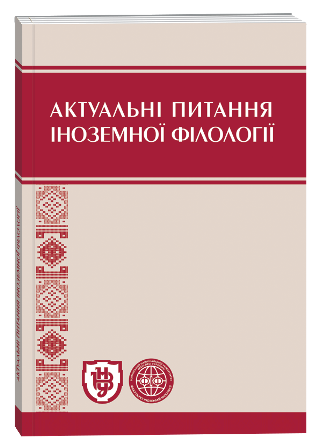
MINIMIZING CULTURAL AND CONCEPTUAL DISCREPANCIES IN SPECIALIZED TRANSLATION
DOI:
https://doi.org/10.32782/2410-0927-2025-23-16Keywords:
specialized translation, cultural discrepancies, conceptual equivalence, translator training, intercultural communicationAbstract
Covering a wide range of areas of human activity, specialized translation requires particular flexibility and attention to both the source and target languages. Fields that require expert knowledge and, therefore, a separate approach to translation range from law and medicine to diplomacy and military affairs. Linguistic, cultural, and conceptual discrepancies in each of these fields pose significant challenges for translation, not only undermining its accuracy and practicality, but sometimes leading to medical errors, diplomatic scandals, or even military conflicts. The purpose of this article is to analyze the sources of cultural and conceptual discrepancies in specialized English- Ukrainian translation and possible ways to eliminate them. The article focuses on three specialized areas of translation: legal, medical, and technical. The study uses a qualitative approach, which involves summarizing the available theoretical literature and analyzing individual examples to identify ways to minimize possible conceptual discrepancies in specialized translation. The analysis is based on key works in the field of translation studies, in particular Skopos theory, the semiotic approach, and models of cultural translation. The integration of context-sensitive approaches and linguistic and cultural competence enables translators to ensure adequate equivalence and effective communication in specialized fields. Based on theoretical foundations and practical solutions, the study focuses on improving the quality of translation in specialized fields. Effective specialized translation also requires close cooperation between translators and specialists in the relevant fields. The article contains recommendations for further research and practice aimed at overcoming cultural and conceptual gaps in translation.
References
Bassnett S. Translation Studies. London: Routledge, 2002. 192 p.
Bowker L. Computer-Aided Translation Technology: A Practical Introduction. University of Ottawa Press, 2002. 185 p.
Hatim B., & Mason I. The Translator as Communicator. London: Routledge, 2005. 256 p.
Jakobson R. On linguistic aspects of translation. The translation studies reader / ed. by L. Venuti. London/New York: Routledge, 2012. P. 126–132.
Lotman Y. M. Universe of the mind: A semiotic theory of culture. Indiana University Press, 1990. 302 p.
Montalt V., & Shuttleworth M. Translation and Knowledge Mediation in Medical and Health Settings. Amsterdam: John Benjamins, 2012.
Peirce C. S. The essential Peirce: Selected philosophical writings (Vol. 1: 1867–1893 / ed. by N. Houser & C. Kloesel; Vol. 2: 1893–1913 / ed. by Peirce Edition Project). Indiana University Press, 1992.
Schäffner C. Translation and Intercultural Communication. Studies in Communication Sciences. London: Routledge, 2018. Vol. 3, Issue 2. P. 79–107.
Venuti L. The Translator’s Invisibility: A History of Translation. London: Routledge, 1995. 368 p.
Vermeer H. J. Skopos and Commission in Translational Action. Readings in Translation Theory / ed. by A. Chesterman. Helsinki: Finnlectura, 1989. P. 173–187.
ДСТУ EN 60204-1:2015. Безпечність машин. Електрообладнання машин. Частина 1. Загальні вимоги. Київ:
ДП «УкрНДНЦ», 2017. URL: https://online.budstandart.com/ua/catalog/doc-page.html?id_doc=68394
British Standards Institution. 2025. URL: https://www.bsigroup.com/
European Standards. 2025. URL: https://www.en-standard.eu/
Ministry of Economy, Environment and Agriculture of Ukraine. 2025. URL: https://me.gov.ua/